A delivery model where Zappix, not you, owns containment, response rate, and cost-to-serve across the platform.
AI Outcomes-as-a-Service is a delivery model where Zappix owns the result: containment rate, response rate, and cost-to-serve, not just the software itself. Instead of handing you a toolkit to configure and run on your own, we design, build, launch, and continuously optimize every deployment as a managed outcome.
You get containment, conversion, and cost-to-serve results, delivered and continuously improved.
Zappix is built for enterprises running a dedicated contact center or customer service function. A few signals this is worth a conversation:
Every engagement runs through one multimodal AI agent, voice and a visual interface moving together in real time, routed into whichever workflow below fits the interaction.
Incoming calls are deflected from live agents to AI self-service, achieving containment rates above 75%. Customers resolve their needs faster, without ever reaching a queue. Agent load drops. Cost-to-serve falls, typically by 40%.
Customers are proactively engaged through fully automated, multi-touch campaigns across voice, text, and email, orchestrated to improve response rates by as much as 3x, while cutting manual outreach effort by up to 60%.

Outbound
Orchestrated, multi-touch campaigns across voice, text, and email — improving response rates and eliminating manual outreach effort.
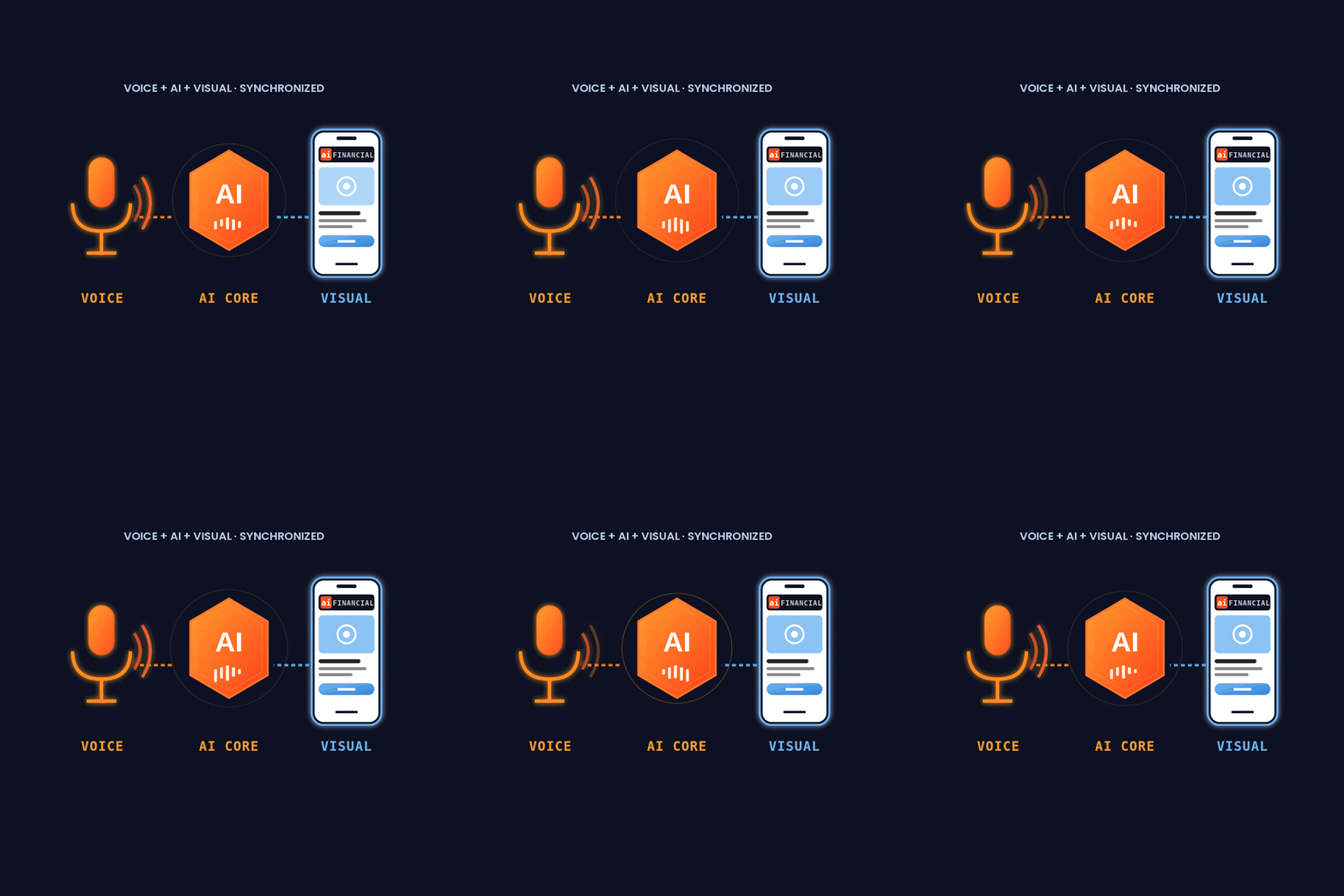
Inbound
Multimodal LLM-powered conversational AI combined with Visual IVR for a simultaneous, real-time voice and visual journey.
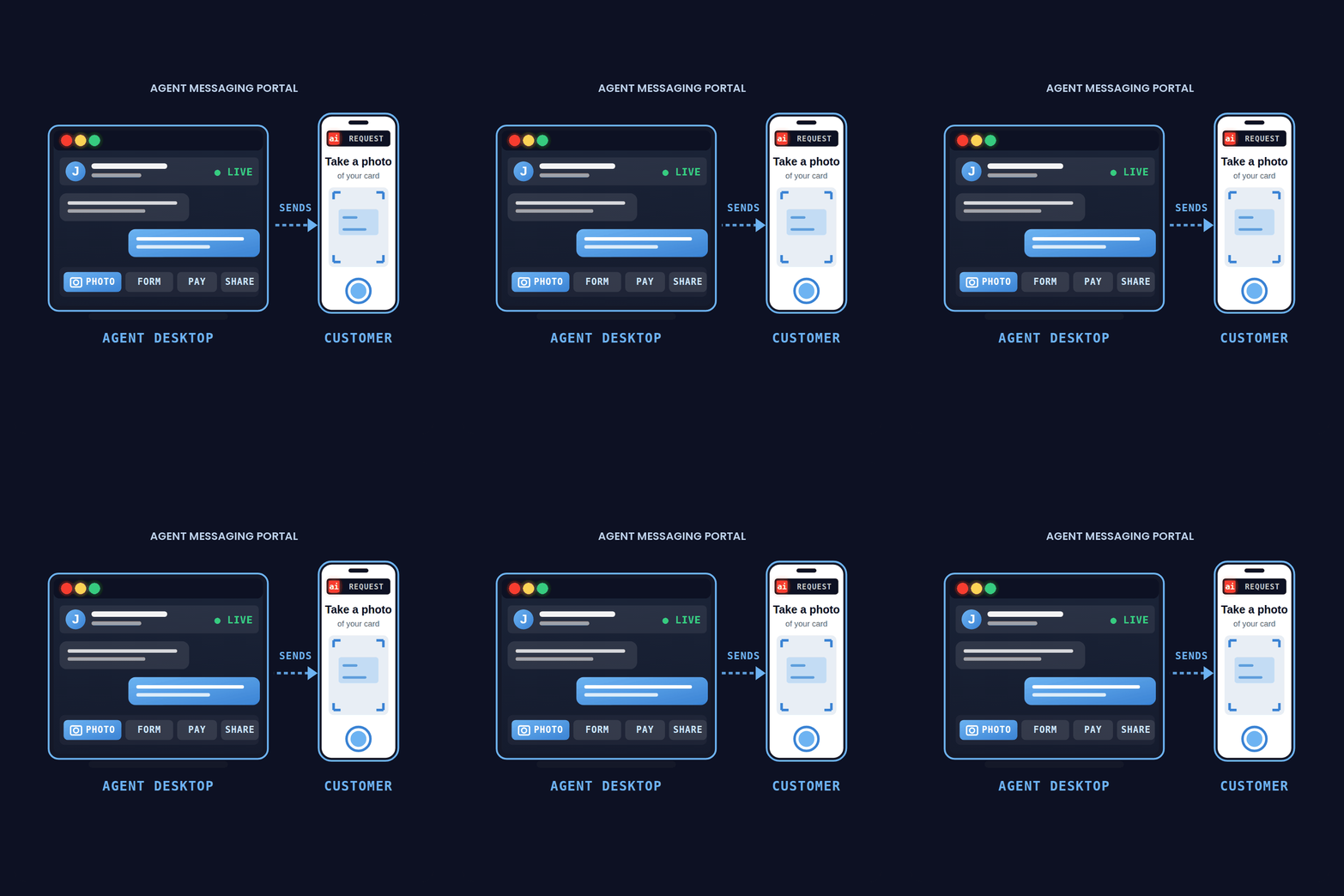
Live Assist
Equip live agents with real-time digital tools — sharing forms, image uploads, screen sharing, secure payments, and chatting live.
These handle call routing and basic self-service, but they weren't built for LLM-powered conversation. Zappix replaces what they do with AI that engages, shows, and resolves, managed and live in weeks, not a multi-quarter IT project.
These hand you the technology and the responsibility for making it work. Zappix hands you the outcome instead: built, launched, and continuously optimized by our team, not yours.
CCaaS platforms are built for routing and infrastructure, and their self-service features are usually add-ons, not purpose-built products. Zappix is CCaaS-agnostic and layers on top of what you already run rather than replacing it.
Most only automate the call itself: one channel, no inbound tie-in. Zappix orchestrates multi-touch campaigns across voice, text, and email, connected to the same platform handling inbound containment.
The build itself is a solvable engineering problem. The harder part is who owns conversation design, tuning, and compliance re-certification after the person who built it moves on, and what the timeline looks like if that person leaves.
It's a delivery model where Zappix owns the result: containment, response rate, and cost-to-serve, not just for shipping you software. We design, build, launch, and continuously optimize every deployment.
Toolkit vendors hand you technology to configure and operate yourself. Zappix operates the deployment end to end, across inbound and outbound, voice and visual, and keeps improving it after launch.
Containment rate, cost-to-serve, outbound response rate, and manual-effort reduction, surfaced through built-in analytics and used to continuously tune each deployment.
Yes. Zappix is SOC 2, HIPAA, and GDPR certified, built for organizations where compliance is not optional.
No. Zappix is CCaaS-agnostic and deploys as an overlay on top of your existing telephony and CCaaS, including Genesys, Avaya, and Amazon Connect, without a rip-and-replace.
Typically 4 to 6 weeks, requiring fewer than 15 hours of your team's time.
Most existing IVRs contain 20 to 40% of inbound volume at best, and the calls that fall through tend to be the same repetitive call drivers every time. Zappix consistently delivers 75%+ containment on exactly those call drivers, using LLM-powered conversation instead of a menu tree.
That's a common starting point. The real question is what happens to the timeline if a key engineer leaves or priorities shift six months in. Zappix goes live in 4 to 6 weeks, requires fewer than 15 hours of your team's time, and keeps improving after launch, without you needing to staff and retain a team to maintain it.
That's a more common experience than most vendors will admit. Most AI platforms hand you a toolkit and walk away, so when performance drops, there's no one accountable for fixing it. Zappix owns the outcome end to end: if containment drops, tuning it is our job, not yours.
The real comparison isn't the sticker price, it's total cost, including the engineering time, ongoing tuning, and compliance work a self-managed toolkit still requires. Customers typically see full ROI within the first quarter once cost-to-serve reductions are factored in.
It means our team handles strategy, design, integration, launch, and post-launch optimization directly, not a partner network or a support ticket queue. Most deployments require fewer than 15 hours of your team's time total, mainly for approvals and access, not building.
That's the right approach for a decision like this. One question worth asking of everything on your list: which of these will design, build, launch, and continuously optimize the deployment for you, and which ones hand you a platform and expect you to run it yourself? That distinction tends to matter more over time than any single feature comparison.
Most deployments move fastest with one internal champion, typically a VP of CX, a head of contact center, or a digital transformation lead, who brings in the COO or CFO for financial sign-off and IT for technical approval as the evaluation moves forward. You don't need full consensus on day one to start the conversation.